Excision vs Ablation vs Robotic Surgery for Endometriosis Explained in New Guide

Nov 3, 2026

Lotus Endometriosis Institute has published a new guide, outlining the key differences between excision, ablation, and robotic surgery for endometriosis, helping patients understand treatment options, recurrence factors, and recovery planning for lasting symptom relief.

Arroyo Grande, United States, November 3, 2026 /PressCable/ -- With the new guide, the Lotus Endometriosis Institute, led by Dr. Steven Vasilev, is helping women considering endometriosis surgery understand the real differences between excision, ablation, and robotic-assisted techniques. Rather than accepting a one-size-fits-all procedure, patients are encouraged to learn how each surgical approach works so they can pursue treatment built for lasting results. For many women facing a surgical decision, understanding these distinctions shapes recovery and the likelihood that symptoms stay resolved.

For more details, visit https://lotusendo.com/posts/excision-ablation-and-robotic-surgery-key-differences

The difference between the two core techniques is straightforward in concept, even if the decision is not: excision involves cutting out endometriosis lesions, while ablation destroys only the lesion surface, often described as burning it off. For ovarian endometriomas, low-certainty evidence suggests excisional surgery may be more effective than drainage and ablation at reducing recurrence and the need for further surgery, meaning the choice of technique can meaningfully shape long-term outcomes, explains Dr. Steven Vasilev.

For superficial peritoneal endometriosis, both excision and ablation can bring pain improvement, so completeness of treatment and the postoperative plan matter more than the label applied to the procedure. Deep infiltrating endometriosis calls for a different standard: experienced specialists, high-quality imaging, and multidisciplinary planning, with excisional strategies designed to protect nerves and organs rather than ablation. The Institute applies this nuanced approach, matching technique to the specific disease pattern found in each patient rather than defaulting to a single method.

Robotic-assisted excision adds a layer of precision to this approach. Proponents say the technique can offer smaller incisions, less scarring, reduced blood loss, lower infection risk, and faster recovery, with a magnified 3D view and fine instrument control that can be valuable in deep or complex excision cases. At the Institute, robotic excision is part of surgical planning for patients whose disease requires that level of detail.

This surgical approach reflects a broader philosophy at the Institute, where technique alone does not guarantee lasting results. Advanced excision and robotic methods are paired with integrative recovery support, including nutrition guidance, hormonal balance, dysbiosis correction, and stress modulation, addressing both the physical removal of disease and the conditions that influence whether symptoms return.

Women considering endometriosis surgery are invited to consult the Lotus Endometriosis Institute to discuss which surgical approach fits their specific diagnosis and goals. The Institute's mission centers on precise surgery, holistic recovery, and results built to last, giving patients a clearer path toward informed decisions about their care.

To learn more about the Lotus Endometriosis Institute and its approach to surgical and integrative care, visit https://lotusendo.com

Contact Info:
Name: Dr. Steven Vasilev
Email: Send Email
Organization: Lotus Endometriosis Institute
Address: 154 Traffic Way, Arroyo Grande, CA 93420, United States
Website: https://lotusendo.com

Source: PressCable

Release ID: 89208350

If there are any deficiencies, discrepancies, or concerns regarding the information presented in this press release, we kindly request that you promptly inform us by contacting [email protected] (it is important to note that this email is the authorized channel for such matters, sending multiple emails to multiple addresses does not necessarily help expedite your request). Our dedicated team is committed to addressing any identified issues within 8 hours to guarantee the delivery of accurate and reliable content to our esteemed readers.

More News

Asian Football Confederation postpones the 2027 Asian Cup because of conflict in the Middle East

Nov 3, 2026

Asian Football Confederation postpones the 2027 Asian Cup because of conflict in the Middle East

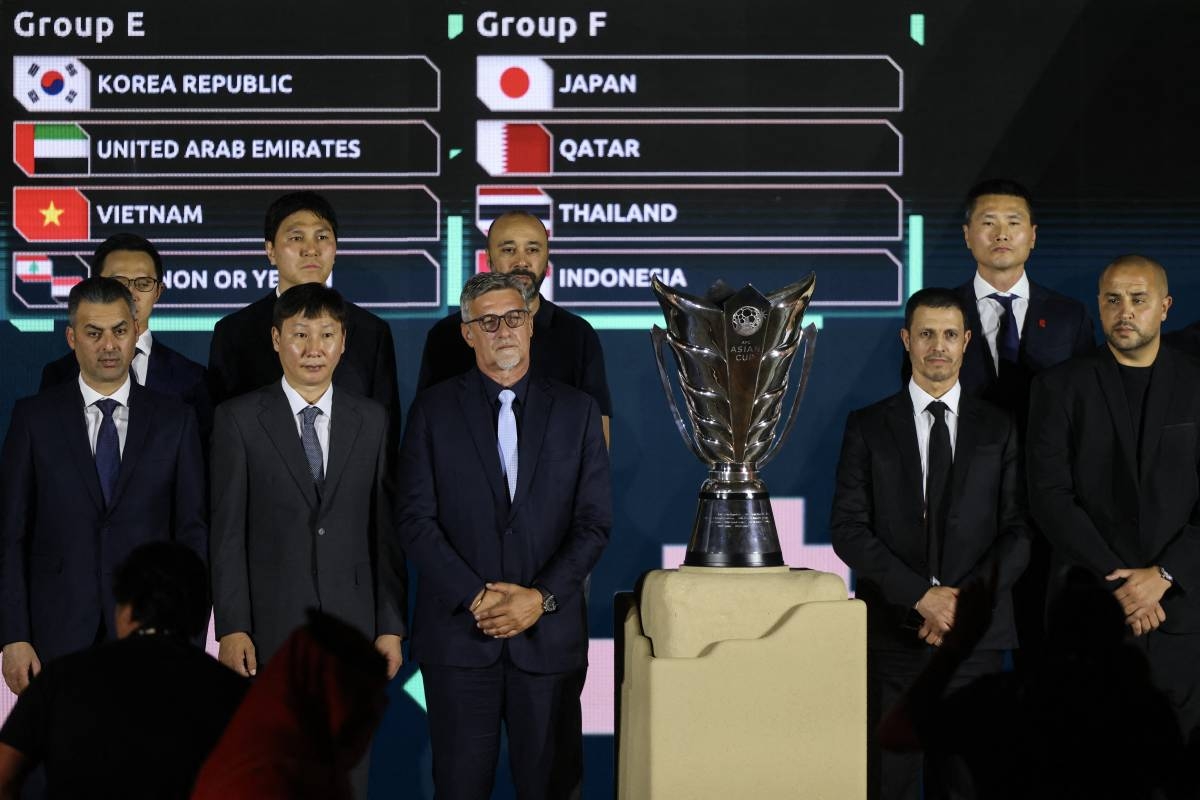
SEOUL — The 2027 Asian Cup soccer tournament has been delayed almost a year in the wake of recent deadly attacks on Saudi Arabia, becoming the biggest sports event to be postponed amid the conflict in the Middle East. The Asian Football Confederation issued a statement Tuesday saying that after extensive consultations with Saudi organizers it had decided to push the start of its marquee continental championship back from Jan. 7 to Dec. 23. Local organizers agreed to reschedule in “circumstances arising from developments in the region, including substantial logistical complexities and travel disruptions,” the AFC said. “Exceptional circumstances have been created for the organization and delivery of the competition as originally scheduled, making the postponement necessary in the interest of all participating teams, officials, spectators and other stakeholders.” The new dates — Dec. 23, 2027 to Jan. 21, 2028 — will be submitted to FIFA for approval. The monthlong tournament was scheduled to feature 24 teams playing matches in eight venues across Riyadh, Jeddah, and Khobar. Iran qualified and has been grouped with Syria, China and Kyrgyzstan for the league stage. The Saudis, Australia, South Korea and Japan were top seeds in other groups. The AFC's announcement ended months of speculation about a postponement which, until recently, had been rejected by local organizers. Muhammed Q. Alghamdi, a spokesman for the organizing committee, last month told members at an AFC meeting in Tokyo that “daily life is ongoing in Saudi Arabia.” Before that meeting, AFC President Sheikh Salman bin Ibrahim Al Khalifa had indicated potential for the Asian Cup to be postponed by a year if necessary and said a final decision could be delayed until late November. Other sports disruptions The Saudi Formula 1 Grand Prix was canceled this season, and the Bahrain race was relocated to Malaysia because of safety concerns related to the Iran war. Races in Qatar and Abu Dhabi are still on the calendar, and F1 has kept Saudi Arabia on the 2027 schedule with a grand prix planned there in March. The WTA Finals, the season-ending event in women’s tennis, was moved from Saudi Arabia to Indian Wells, California. Asia's marquee continental club soccer tournament — the AFC Champions League Elite — has already been disrupted. A game between Cristiano Ronaldo ’s Al-Nassr and Uzbekistan’s Neftchi Fergana was delayed on Oct. 12 after Saudi Arabia’s Civil Defense issued a security alert. An Al-Nassr’s home game last week was postponed when against Al-Wasl of the United Arab Emirates didn't travel to Riyadh. Impact on Asian Cup teams Tuesday’s postponement means national federations across Asia face decisions about coaching staff with the originally scheduled Asian Cup marking the end of a four-year cycle before attention turns toward qualification for the 2030 World Cup. Australia coach Tony Popovic, who guided the Socceroos to the knockout stage of the 2026 World Cup, turned down a four-year contract extension in September in favor of a shorter deal through the Asian Cup. “It was my choice to go until the Asian Cup,” Popovic said at the time, saying a decision on his longer-term future would then be made with the Australian federation. “I know the legacy that I will leave behind,” he said. “And if it’s someone else that takes it forward, that’s fine. If it’s me, great, we agree to do this together.” South Korea is also in a difficult position. After a disappointing World Cup, the Korea Football Association appointed Robert Moreno as interim coach in September. The former Spain coach was given a contract through the end of November, with the possibility of a two or three-month extension to cover the Asian Cup. A strong tournament was expected to lead to a permanent appointment but now the KFA will have to make a decision without seeing how the team performs in the continental championship which it hasn't won since 1960. After the World Cup, Japan gave coach Hajime Moriyasu an extension through the Asian Cup, with under-21 coach Go Oiwa then due to take over. “Mr. Moriyasu has already shown that he can win in Asia, and we hope he can do so again by winning the Asian Cup,” Japan Football Association President Tsuneyasu Miyamoto said when the appointment was announced. “We worked backward from the goal of winning the Asian Cup. As for Mr. Oiwa, as the U-21 manager, we wanted him to focus on winning the Asian Games and to remain fully committed to the U-21 team until the end of the year.” In Iraq, coach Graham Arnold signed an extension after the World Cup that was also designed to run through the Asian Cup.

YOUR NEWS, OUR NETWORK.

Do you have Great News you want to tell the world?

Be it updates about your business or your community, you can make sure that it’s heard by submitting your story to our network reaching hundreds of news sites across 6 verticals.